Water Softener Installation: Complete DIY Guide + When to Hire a Plumber
Affiliate Disclosure: This guide contains affiliate links. We may earn a commission at no extra cost to you.
DIY or Professional Install?
| Factor | DIY Install | Professional Install |
|---|---|---|
| Cost | $0–$100 (materials only) | $200–$600 labor |
| Time | 2–4 hours | 2–4 hours (same day) |
| Skill required | Basic plumbing | None |
| Tools needed | Yes (see below) | No |
| Warranty implications | None (most brands) | None |
| Best for | DIYers, budget-conscious | No plumbing experience |
Most whole-house water softeners - including SpringWell and Fleck systems - are designed for DIY installation. If you can solder copper pipe or use SharkBite push-fit fittings, you can install a softener yourself. If cutting into your main water line feels outside your comfort zone, a licensed plumber will typically do the full installation for $200–$600 depending on your local market.
Before You Start: What You Need
Location Requirements
- Access to main cold water supply line - the softener must be installed before water splits to your water heater (treat cold water only; hot water runs through the system).
- Drain access - the brine discharge line needs a drain: floor drain, utility sink standpipe, or sump. Must be within 30 feet of the unit.
- Electrical outlet - 110V standard outlet within 6 feet for the control head. Most systems use very little power ($3–$8/month).
- Space - typical softener tanks are 10–18" diameter and 40–54" tall. Plus brine tank (roughly same footprint). Allow 6" clearance around tanks.
- Temperature - must be installed in an unconditioned or conditioned space that stays above 32°F. Garages in cold climates may need insulation.
Tools You'll Need
- Pipe cutter (for copper) or hacksaw (for PVC/CPVC)
- SharkBite push-fit fittings or soldering equipment
- Adjustable wrench and channel-lock pliers
- Teflon tape (plumber's tape)
- Bucket and towels
- Level
- Drill and bits (for mounting bypass valve bracket if needed)
Parts to Have Ready
- Bypass valve (usually included with the softener)
- Inlet/outlet fittings sized to match your existing pipe (typically 1" or 3/4")
- Flexible drain tubing (usually included)
- Drain clamp or air gap fitting (check local codes)
- Teflon tape
Step-by-Step Installation
Step 1: Shut Off Water and Plan Your Location
Turn off the main water supply to your home. Open the lowest faucet in your house to drain pressure from the lines. Find the ideal installation point on your main cold water supply - this should be after the main shutoff valve and pressure regulator, but before the cold water line splits to serve your water heater.
Step 2: Mark and Cut the Pipe
Mark two cut points on the supply pipe, leaving enough room for the softener's bypass valve and inlet/outlet connections. Use a pipe cutter to make clean, square cuts. For copper pipe, file or deburr the cut edges. Catch the water that drains out with a bucket.
Step 3: Install the Bypass Valve
The bypass valve lets you divert water around the softener for maintenance without shutting off your whole house water supply. Install the bypass valve between the two cuts using the fittings provided. If using SharkBite fittings: push firmly until you feel it seat. If soldering: apply flux, solder cleanly, let cool fully before stressing the joints.
Critical: The bypass valve has flow direction markings - confirm the "IN" side faces your incoming water supply (from meter/well). Installing backward is a common mistake.
Step 4: Position the Softener Tanks
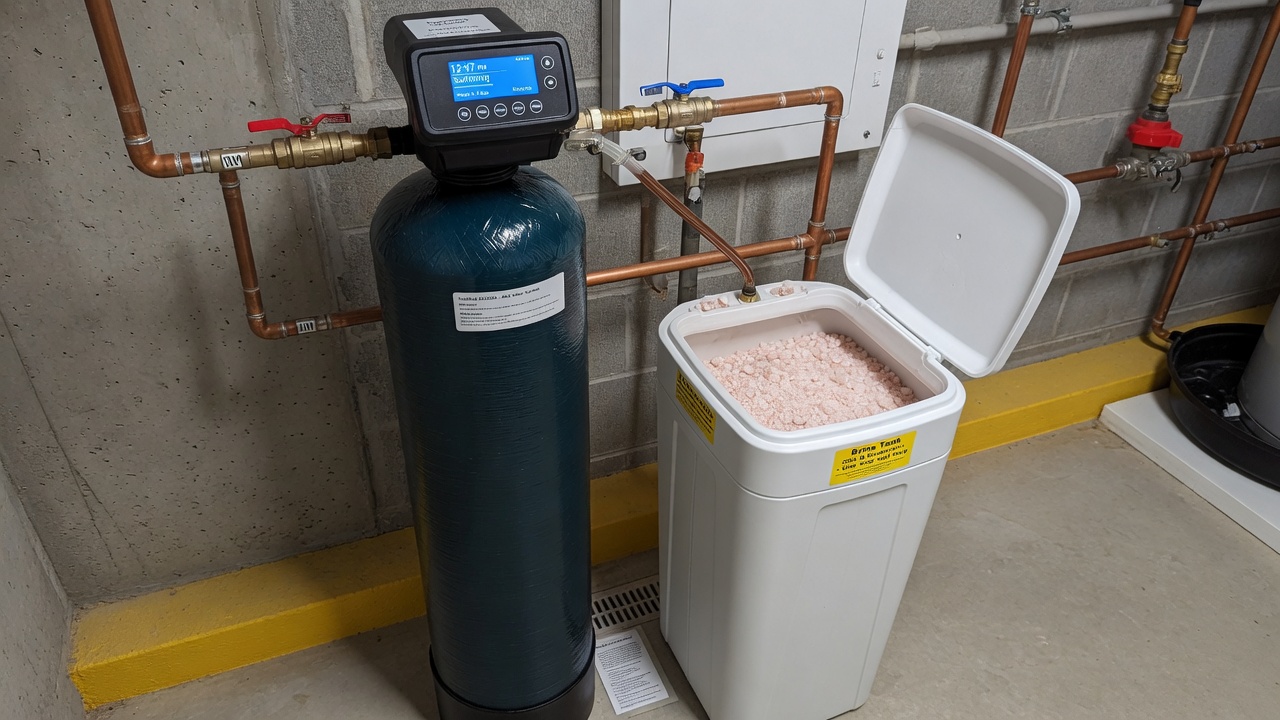
Place the resin tank (the taller, narrower tank) where the bypass valve connections will reach. Connect the outlet and inlet ports of the control head to the bypass valve using the fittings provided. Hand-tighten first, then snug with pliers - do not over-tighten plastic fittings.
Set the brine tank (shorter, wider) next to the resin tank. Connect the brine line (typically a small 3/8" tube) from the brine tank to the designated port on the control head.
Step 5: Run the Drain Line
Connect the drain line from the control head's drain port to your drain. The drain line must be secured to prevent siphoning - most systems include a drain line flow control (DLFC). If required by local code, install an air gap between the drain line and the drain to prevent backflow contamination.
Step 6: Slowly Restore Water and Check for Leaks
With the bypass valve in the bypass position, slowly turn the main water back on. Check all connections for leaks. If using SharkBite fittings, look for drips at each push-fit. Soldered joints should be dry. Tighten or re-make any leaking connections before proceeding.
Step 7: Add Resin (if needed) and Salt
Most systems ship with resin pre-loaded. If yours doesn't, add the resin to the mineral tank before connecting. Add 40–80 lbs of softener salt to the brine tank (do not overfill - leave 6" of clearance from the top).
Step 8: Program the Control Head
With power connected, program the control head with your water hardness (GPG), household size (for demand-initiated systems), and current time. The manual will walk through this - most digital heads have intuitive button navigation.
Step 9: Run a Manual Regeneration Cycle
Before putting the system into service, run a manual backwash/regeneration cycle. This cleans any fine resin dust from manufacturing and verifies all connections hold under pressure. Most control heads have a "Regenerate Now" or "Manual Regen" function.
Step 10: Put in Service and Verify
After the regen cycle completes, switch the bypass valve to the service (in-line) position. Run a cold water faucet until the water flows clear. Check a faucet with a hardness test strip before and after - you should see essentially 0 GPG after softening.
The First 30 Days: What to Expect After Installation
The transition to softened water is not always immediate or seamless. Knowing what is normal helps you distinguish a properly functioning system from one with a problem.
Water May Taste Different at First
Some homeowners notice a slightly different taste in the first week or two. This is normal. The softener is removing calcium and magnesium (minerals your palate was accustomed to) and replacing them with sodium ions. The taste difference fades as you adjust. If the water tastes salty or has a noticeable mineral flavor after two weeks, check your salt efficiency settings -- the system may be overcharging the resin.
Existing Scale Will Not Disappear Overnight
Softened water flowing through pipes with years of scale buildup will slowly dissolve that scale over months. Some homeowners notice a temporary increase in particulate in their water during the first few weeks as existing deposits are dislodged. This is normal and will pass. A sediment filter downstream of the softener can catch this during the break-in period.
Check Salt Level After First Regeneration
After the first programmed regeneration cycle, check how much salt was consumed. This gives you a baseline for how often you need to refill the brine tank. Most systems with demand-initiated regeneration will consume 6-10 pounds of salt per regeneration cycle, roughly every 7-10 days for a typical household.
Verify Hardness Reduction
Two weeks after installation, test your water hardness at a cold tap with a test strip. You should see 0-1 GPG (effectively zero). If you still see hardness above 2-3 GPG, the system may be bypassing, the resin may be exhausted (undersized system), or the control head settings may need adjustment. Call the manufacturer's support line if the issue persists.
Troubleshooting Common Problems
| Symptom | Likely Cause | Fix |
|---|---|---|
| Hard water still present after softener installed | Bypass valve still in bypass mode, OR control head not programmed correctly | Switch bypass to service position. Reprogram hardness setting. |
| Salty taste in water | Salt dosage too high, or brine rinse not completing fully | Reduce salt setting. Check drain line for restrictions. |
| Water pressure drop after installation | Sediment in resin tank (new system), or flow rate mismatch | Run manual backwash. Verify system GPM matches household demand. |
| Softener not regenerating | Power disconnected, timer off, or meter head clogged | Check power. Reset timer. Inspect turbine in flow meter. |
| Brine tank overflow | Float valve stuck or drain line clogged | Clean or replace float valve. Clear drain line restriction. |
| Orange or rust-colored water | Iron in water exceeding softener capacity | Add iron pre-filter upstream of softener. |
| Salt bridge in brine tank | High humidity or fine-grained salt | Break up bridge with broom handle. Switch to pellet or crystal salt. |
Common Installation Mistakes
- Installing backward: Inlet/outlet reversed - water flows the wrong direction. Always double-check the flow direction arrow on the bypass valve.
- No drain air gap: Required by code in many jurisdictions. Skipping it can cause backflow contamination of your water supply.
- Over-tightening plastic fittings: Crack fittings and cause leaks. Hand-tight + 1/4 turn is usually sufficient.
- Installing in the wrong location: Installing after the water heater means only cold water is treated. Install on the main cold supply before any splits.
- Skipping the bypass valve: Some people plumb the softener in-line without a bypass. This means your whole house has no water during maintenance. Always install the bypass valve.
- Wrong drain line slope: The drain line should slope continuously downhill to the drain. Horizontal runs or uphill sections trap water and impede drainage.
Installation Cost Breakdown
| Item | DIY Cost | Pro Cost (included) |
|---|---|---|
| SharkBite fittings (set) | $25–$45 | Included |
| Drain line / fittings | $10–$20 | Included |
| Teflon tape, misc | $5–$10 | Included |
| Labor | $0 | $200–$600 |
| First salt fill (80 lbs) | $12–$20 | Often included |
| Total | $50–$100 | $200–$600 |
Best Systems for DIY Installation
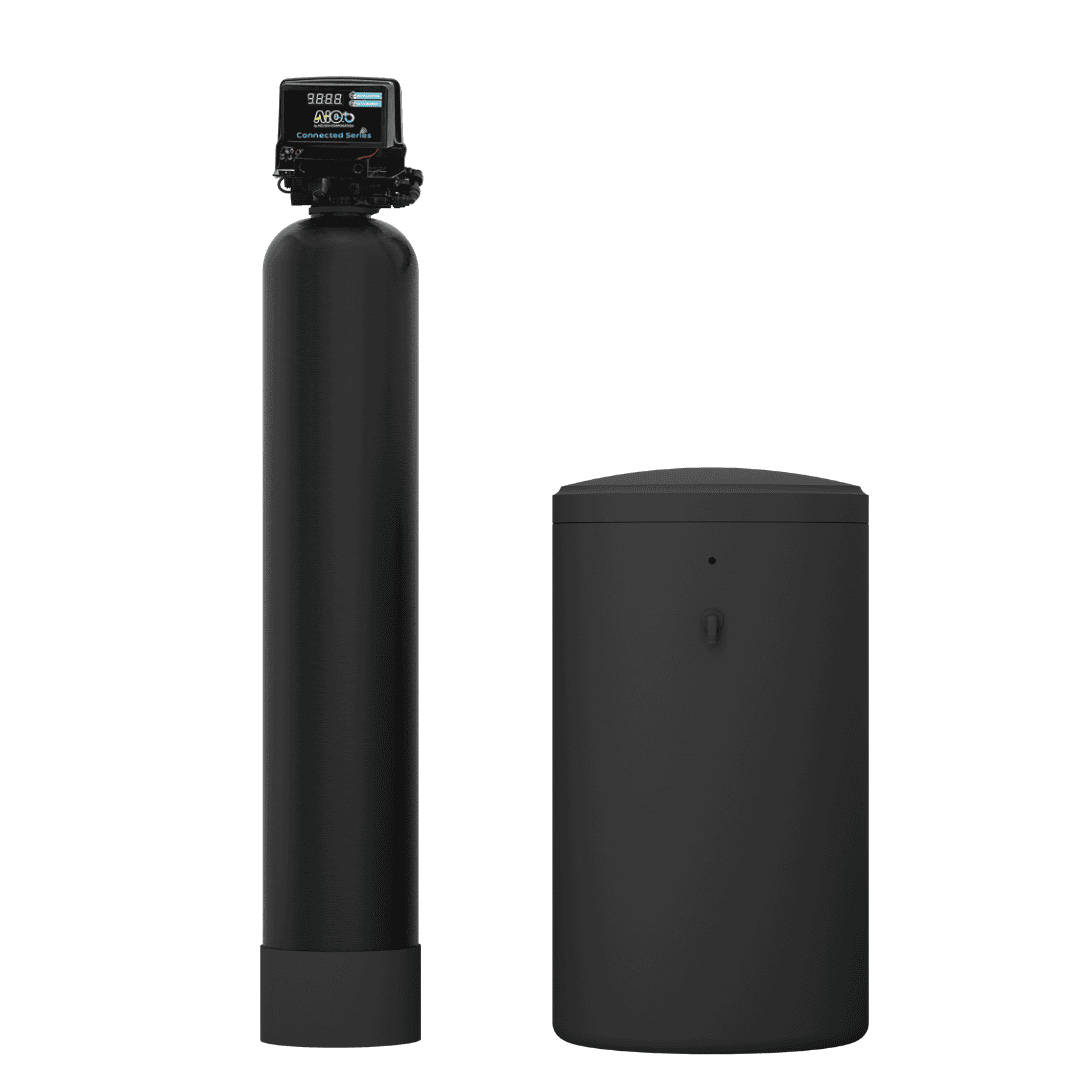
Detailed video instructions, US-based phone support, all fittings included. Most DIY installs completed in 2–4 hours. Lifetime warranty not voided by self-installation.
Industry-standard valve, enormous DIY community, hundreds of YouTube tutorials. Easiest system to find local support for.
Installation FAQ
Do I need a permit to install a water softener?
It varies by municipality. Most US jurisdictions do not require a permit for a water softener installation. Some require only that the drain connection meets plumbing code (typically an air gap). Check with your local building department before installing if unsure. The International Plumbing Code provides baseline requirements.
Can I install a water softener in my garage?
Yes, if temperatures stay above freezing. Most softeners are not frost-proof - freezing temperatures will crack the resin tank. In cold climates, an insulated garage or utility room is the right location. If your only option is a cold garage, insulate the pipes and consider a tank wrap insulation kit.
How long does installation take?
For a competent DIYer, 2–4 hours including the initial regeneration cycle. A licensed plumber can typically complete the job in 1–2 hours. Plan for your water to be off for the bulk of the installation - let your family know in advance.
Will installing myself void the warranty?
For SpringWell and most online-direct brands, DIY installation does not void the warranty. Culligan systems must be installed by a dealer technician to maintain the warranty. Always check your specific manufacturer's warranty terms before installing.
How do I install a water softener with copper pipes?
You have two main options for connecting to copper pipe. Soldering (sweat fitting): requires a torch, flux, solder, and basic skill. Makes permanent, reliable joints. Requires the pipe to be completely dry before soldering. SharkBite push-fit fittings: no tools, no heat, no solder. Push onto deburred copper and twist to lock. Can be removed and reused. Both methods are reliable for this application. Most DIY installers choose SharkBite for ease, even though the fittings cost slightly more than soldered connections.
Where exactly should I install the water softener in my home?
The ideal location is on the main cold water supply line, after the main shutoff valve and pressure regulator, but before the line splits to serve your water heater. This treats all water entering your home, including cold water at every fixture. Installing after the water heater only softens hot water, which misses cold water fixtures. For well water systems, install after any sediment pre-filters and before the pressure tank. The physical location should be indoors, above freezing, with access to a drain within 6-8 feet and a 110V electrical outlet within reach of the power cord.
When to Hire a Plumber Instead
DIY installation is realistic for most homeowners, but there are situations where hiring a licensed plumber is the smarter call. If your home has galvanized steel pipes (common in homes built before 1960), cutting into them releases rust and debris, and the corroded pipe sections may need replacement as part of the project. That is beyond a typical DIY water softener install. Similarly, if your main supply line is not easily accessible -- buried in a finished wall, or in a crawl space with limited working room -- the physical difficulty can make even a competent DIYer's job miserable and mistake-prone. If you are dealing with any of these situations, budget $300-$600 for professional installation and save yourself the headache. The systems with the most straightforward installations (SpringWell, Fleck 5600SXT) are the ones that keep the most installation calls out of the shop -- they are designed to be DIY-friendly precisely because their customer base expects to install them without paying dealer rates.